




Nonprofit Management and Governance
How to run a nonprofit efficiently, ethically and with a board that knows what it’s overseeing.
Universities · Associations · Boards
Published Author · Speaker · Thought Leader · Lecturer · CEO
Nonprofit accountability, ethically managed capital.
Douglas J. Bystry has spent over thirty years lending in low-income communities, including extensive work in Indian Country. He founded Clearinghouse CDFI in 1996 and structured it as a for-profit, which meant paying taxes on work most organizations in this field do tax-exempt. That choice is where the book started.
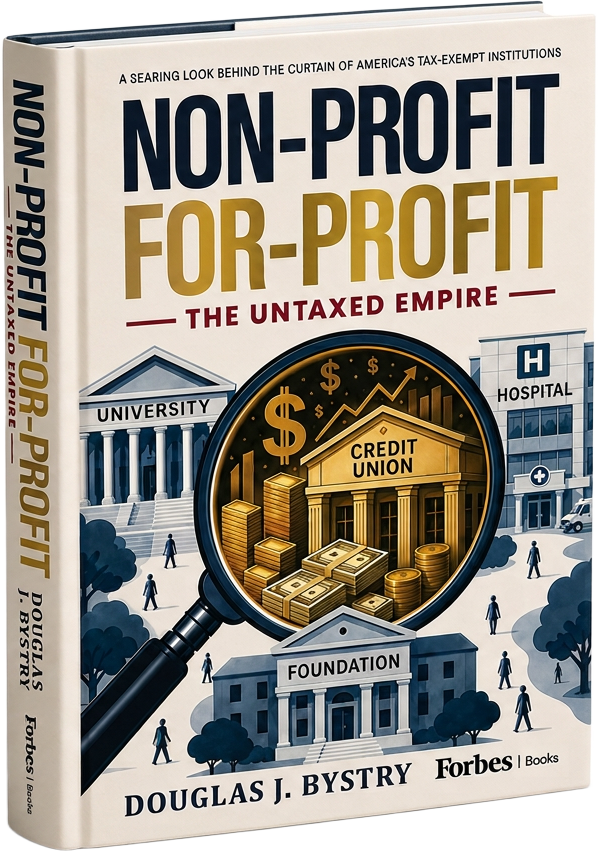
Forbes Books · Publishing February 23, 2027
The Untaxed Empire
The book goes sector by sector and asks what tax exemption is actually buying the public. Doug wrote it because the same questions kept coming up in rooms where he was the only one who had run an organization both ways.
Pre-order the book
Or leave your email and we’ll let you know the day it’s out.
We will email you when the book is out, and occasionally with news from Doug. Unsubscribe at any time.
Some sectors the book examines
Some of them buy stadium naming rights.
The nonprofit and for-profit ones are hard to tell apart.
Endowments running into the billions.
Where the money sits, and for how long.
Some of the biggest names in sports are tax-exempt.
Churches don’t file the annual IRS returns most other nonprofits do.
Most do what they say. The question is how anyone would know.
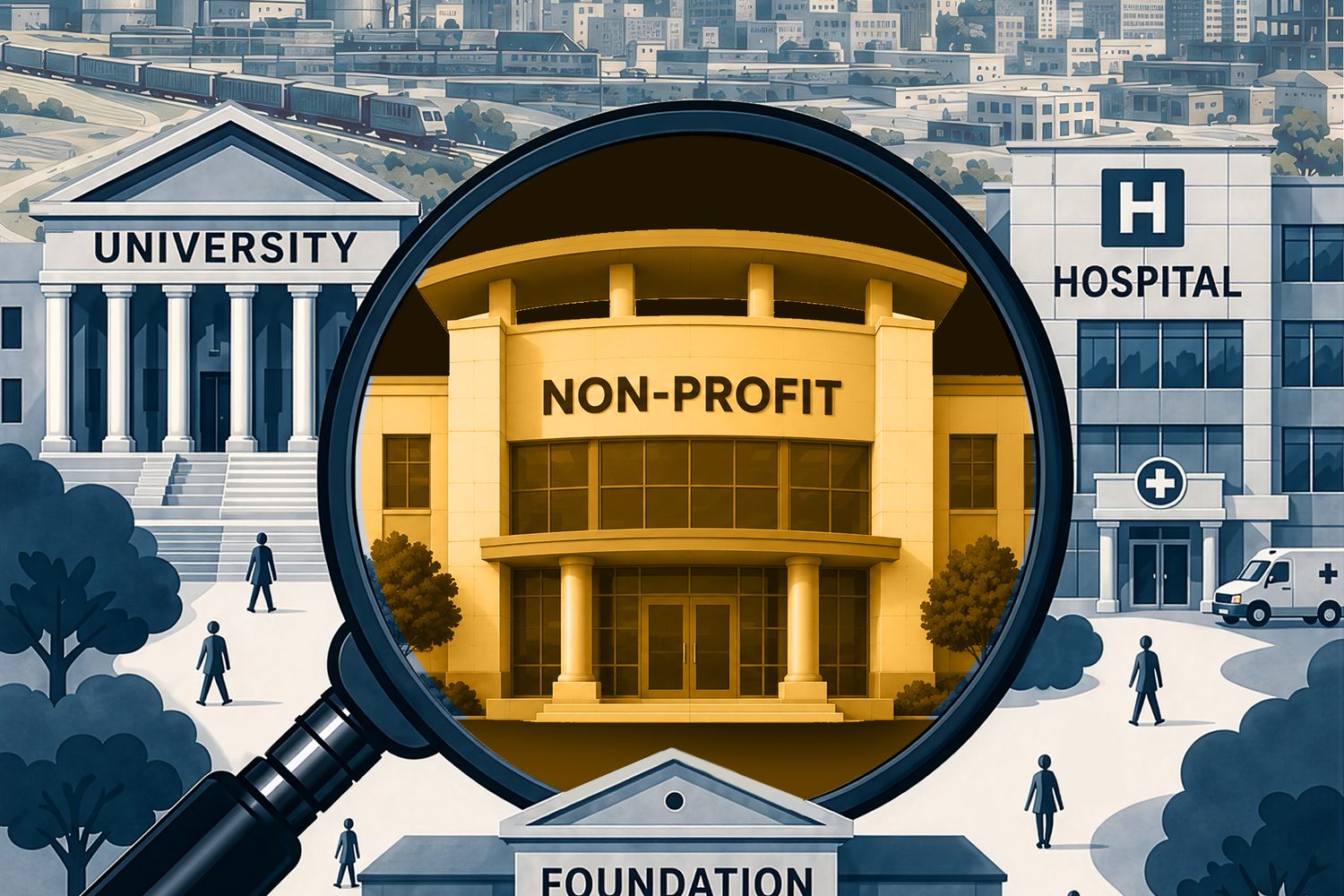
Americans gave about $617 billion to nonprofits last year. Most of it goes roughly where people hope it goes.
After a few decades in the sector, what Doug notices is that almost nobody asks the next question. Who is this organization, how does it actually run, and what is it doing with the exemption it was given? Most donors have no practical way to find out, and he doesn’t think that’s their fault.
His argument isn’t that the sector is corrupt. He has worked in it and still believes in most of what it does. It’s narrower than that: a category built for one kind of organization now covers a lot of things that don’t look much like it.
Giving USA, 2026 report, covering 2025
The company
Doug founded Clearinghouse in 1996 and structured it as a for-profit. It lends in the same places its peers do, on the same kinds of projects, and it pays taxes on the work.
Now in its thirtieth year, it has grown into one of the largest CDFIs in the country. Most of what Doug knows about how these organizations actually operate, he learned running it.